How to Make Lentil Dal
I’ve had several requests for my lentil dal recipe. The problem up until now has been that my process is a combination of muscle memory and tasting/adjusting until it’s right. Last month, Ami sat in the kitchen and took notes as I narrated my steps and ingredients, so we have reverse-engineered a recipe.
I learned how to make dal when I was in high school, from Vandu Patel, a dear family friend/aunt of choice. So I learned it from a home cook who comes from India. However, we lived in a Chicago suburb without easy access to an Indian market, so the ingredients are influenced by what could be purchased at Dominick’s in 1995. And then it’s been 30 years of me, a white Jewish-American, adjusting it to my own tastes. It’s also worth noting that Vandu is from Gujarat, in western India, which is a different region than most Indian restaurant food in the US comes from.
This recipe is designed to be mixed with a starchy carbohydrate. White basmati rice is traditional. Brown basmati rice and East Asian short-grain rice are good, too. I like it with farro/wheat berries and even with mashed potatoes. Dipping naan or pita into it would be traditional and tasty. I have eaten it without rice (directly from the Tupperware while drunk at 2 AM when I was in my twenties, for example), but it is not as good that way.
Over the years, I’ve tried a number of variations on this recipe, sometimes out of experimental curiosity and sometimes out of necessity. If I note a valid substitution or caution you not to do something, that’s based on evidence. If your question begins with “What if I…?” and there’s no clear answer in this document, I have never tried to do it and therefore have no idea. If you try a variation that works, I’d love to hear it!
Ingredients
- 1 Tbsp coconut oil
- 4 Tbsp vegetable oil (canola or similar) + 1 tsp (optional)
- 1 Tbsp fresh ginger, peeled and grated. Pack the ginger down before measuring. I usually freeze fresh ginger, as it will keep in the freezer for at least 6 months and is easier to grate and peel when frozen. You can substitute dried, powdered ginger; about the same amount will work.
- ½ of a medium yellow or white onion, peeled and diced
- 4 cloves of garlic, peeled and diced
- 1 Tbsp fresh turmeric, peeled and grated. Like ginger, it keeps well in the freezer and is easier to grate and peel. You can substitute dried, powdered turmeric in the same amount.
- 1 Serrano pepper, diced, seeds and ribs removed. If you are less of a spice wimp than I am, keep the seeds and ribs in, or get some hotter peppers and use the amount you like. If you are more of a spice wimp, reduce the amount of chili pepper or leave it out. If you can’t get serranos, half a jalapeno will do. If you don’t have a fresh pepper, start with ½ tsp of dried, ground cayenne pepper, or grind ½ of a dried whole pepper into coarse powder.
- 1.5 Tbsp dried, ground coriander seed
- 1 tsp dried, ground cumin
- 1 tsp dried, ground cardamom
- 1 tsp dried, ground cinnamon
- 1 tsp dried, ground black pepper
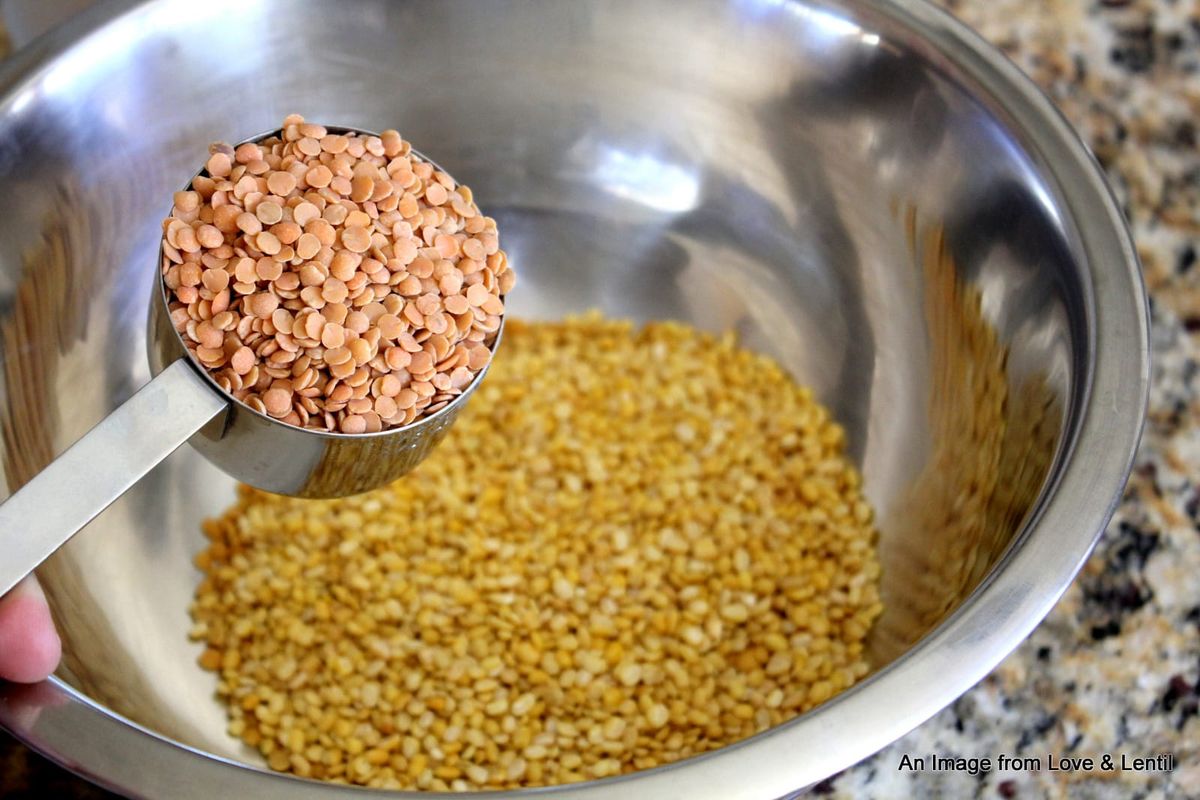
- 1 cup dried red lentils. Other lentil types (green, brown, black) work well, although the texture might be a little different. You can also substitute dried green or yellow split peas. The recipe is flexible with other types of beans/legumes, but you’ll need to adjust the water and cooking time. I do not recommend using canned beans.
- 3 cups + 2 cups filtered tap water (Lake Michigan preferred, but yours is probably fine)
- 1 dried bay leaf
- Salt to taste (about a teaspoon total)
- 1 cup white basmati rice, rinsed and drained
- 3 whole dried cardamom pods (optional)
- 4 tsp Plain Greek yogurt (optional)
Instructions
1. Wash your damn hands. Get a medium to large enamel (non-stick is acceptable) Dutch oven/soup pot and place on your favorite stove burner.
2. Over medium heat, melt 1 Tbsp of coconut oil with 4 Tbsp canola oil or similar neutral vegetable oil. I have tried using ghee, but Vandu uses vegetable oil, which I think results in a silkier, more pleasant texture. Don’t use olive oil, which smokes at way too low a temperature.
3. Lower the heat slightly and add your aromatics: ginger, onion, garlic, turmeric, coriander, cumin, cardamom, cinnamon, black pepper, serrano pepper. Cook, stirring frequently, until the onions are translucent and the other spices are dissolved into the oil. You should have a thick paste that you have to scrape off the bottom of the pot. It will be reddish-brown and smell fantastic.
4. Add 1 cup of lentils and 3 cups of water to the pot. Also add 1 bay leaf and a generous pinch of salt. Stir everything together. Raise heat to high. Stir frequently until it reaches a rolling boil.
5. When the lentil mixture is boiling, reduce heat to low and cover the pot. If you have a rice cooker, it will serve as a timer for the next step, because your rice will be done when the dal is. (If not, rice takes about the same amount of time in a saucepan but needs a lot more stirring and checking.) Put 1 cup of white basmati rice and 2 cups of water in the rice cooker, along with 3-4 dried cardamom pods. If you want fluffy rice, you can add a splash of vegetable oil, but I like my rice Japanese-style and sticky. Press the “white rice” button and let the cooker make its weird gurgling noises and spurts of steam until it’s ready to beep loudly.
6. Every five minutes until the rice cooker beeps, stir the lentil mixture. Taste it about every 15 minutes (every third time you stir), and add spices if needed. The first time you do this, you’ll recognize if there’s not enough salt (there isn’t), and probably if it needs more black pepper. Your expertise in other spices will improve over time. Add hot pepper with caution, as the spiciness develops as the dal reduces. Cinnamon and cumin will add warmth. Turmeric makes it earthy. Cardamom and cinnamon make it sweeter. Cumin gives it smokiness. If it just tastes wrong and you can’t put your finger on why, add coriander.
7. When your rice cooker beeps, check the consistency of your dal. It should be a thick, lumpy mush with a silky texture. All the water should be fully absorbed. It should stick to the bottom of the pot but scrape off easily. If it’s not there yet, keep stirring every five minutes until it gets there.
8. Discard the bay leaf from the dal and the cardamom pods from the rice.
9. Scoop about ¼ of the rice from the cooker into a cereal bowl. Top with about ¼ of the dal. If it turned out too spicy, and/or you want to give it some acid and creaminess, dollop a teaspoon of plain Greek yogurt. Mix everything together and enjoy.
Since the last time I posted, we got a new cat! We are now up to three little weirdos. This is Wabecca, a petite orange lady whose hobbies include sneak-attack bapping your feet from under the bed, sitting in the windowsill watching the world go by, and chasing the laser pointer. I love her fuzzy lion face so much.